
Indian stock markets this week will be primarily influenced by a series of corporate Q1 earnings, the evolving geopolitical situation in West Asia, and fluctuations in crude oil prices, according to market analysts.

Bharti Airtel, India's second-largest telecom operator, reported a 37.3 per cent rise in consolidated net profit to 8,167 crore for Q1 FY27, driven by the addition of high-paying premium customers, despite missing Bloomberg consensus estimates.

'Healthy double-digit returns are still possible, though a sharp rally is unlikely.'

Ahmedabad Cyber Crime Branch has uncovered a Rs 1.5 crore WhatsApp fraud, leading to the arrest of two key SIM and OTP suppliers in West Bengal. The investigation revealed a sophisticated international cybercrime network spanning China, Pakistan, India, and Hong Kong, operating a "boss scam" and utilizing a "Cybercrime as a Service" model. Police recovered a significant portion of the defrauded amount and secured thousands of devices.

Reliance Industries (RIL) delivered a better-than-expected operational performance in Q1FY27, driven by a recovery in its oil-to-chemicals (O2C) business and robust gains in the telecom (Jio) segment, though its retail arm missed estimates. Analysts highlight the upcoming Jio Platforms IPO and execution in new energy and consumer businesses as key triggers for the stock's future growth.
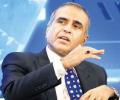
Telecom czar Sunil Bharti Mittal plans to hand over the reins of Bharti Airtel to his children in the next decade and desires that promoter firm Bharti Telecom regains over 50 per cent stake in the company.

Indian equity benchmarks Sensex and Nifty surged nearly 1 per cent, driven by strong earnings reports from FMCG and auto sectors, alongside a rally in Asian markets and signs of de-escalation in geopolitical tensions.

Indian benchmark indices Sensex and Nifty experienced a significant tumble in early trade, primarily driven by heavy selling in HDFC Bank following its quarterly earnings and a sharp spike in Brent crude oil prices due to escalating tensions between the US and Iran. Track Sensex, Nifty

DIIs invested $22.8 billion in Indian equities in Q2CY26.
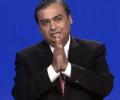
Reliance Industries Ltd on Thursday reported a 7.4 per cent rise in its December quarter net profit, as its retail business rebounded and telecom earnings rose. Its consolidated net profit of Rs 18,540 crore, or Rs 13.70 per share, in October-December - the third quarter of April 2024 to March 2025 fiscal (FY25) - compared to Rs 17,265 crore, or Rs 12.76 a share, in the same period a year back, according to a stock exchange filing by the company.

Reliance Industries Ltd reported a 22 per cent year-on-year decline in consolidated net profit for the June quarter, primarily because the previous year's earnings were inflated by a one-time gain from the sale of its stake in Asian Paints.

Global brokerage Citi has reduced its Nifty 50 index target to 26,000 from 27,000, citing persistent geopolitical tensions, risks to corporate earnings growth, and concerns about India's role in the global artificial intelligence (AI) ecosystem.

Reliance Industries' digital arm, Jio Platforms, may see its initial public offering (IPO) delayed to the second half of fiscal 2027, according to CreditSights. The delay is primarily attributed to ongoing geopolitical tensions in the Middle East, which could impact market conditions and investor sentiment.

Companies are already diversifying sourcing, raising prices, and reworking operating models as the disruption drags on.

Airtel, which upgraded all postpaid customers to priority plans, argued that the service did not throttle or degrade the experience for its prepaid customers, forming the majority of its 368 million customers in the country.

The robust earnings, shown by corporate India in the first half of this year, may not sustain the momentum due to slowdown in performance of IT and telecom sectors, making it difficult to match the forecasted growth for the entire fiscal.
Investors are keenly awaiting clarity on Reliance Jio Infocomm's IPO, the company's AI and data centre strategies, and next-generation leadership structure at Reliance Industries Ltd's (RIL's) 49th annual general meeting (AGM).

Reliance Industries Ltd reported a 12.5 per cent fall in its March quarter net profit, primarily impacted by the global energy crisis affecting its oil and chemicals business, while its consumer-facing Jio Platforms unit saw a 13 per cent increase in profit after tax.

Foreign brokerages have started to cut their year-end targets for the Nifty 50 index amid the ongoing West Asia conflict.

Foreign portfolio investors (FPIs) withdrew a substantial amount from Indian equities in the first half of March, driven by geopolitical tensions, rupee depreciation, and concerns about crude oil prices.

Aviation fuel prices for domestic airlines remain unchanged, providing stability for local carriers, while commercial LPG and 5-kg cylinders see a significant rate hike due to rising international energy costs.
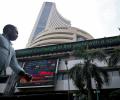
Among the Sensex firms, Bharat Electronics Ltd, Mahindra & Mahindra, Adani Ports, HCL Technologies, Eternal, Infosys, Bharti Airtel, Sun Pharmaceuticals, Larsen & Toubro, Hindustan Unilever and UltraTech Cement were the gainers. Bajaj Finance, Tata Motors Passenger Vehicles, Kotak Mahindra Bank, PowerGrid and Tata Steel were among the laggards.

The Indian IPO market is experiencing a significant surge in preliminary filings, with 38 companies submitting papers to SEBI in March 2026, driven by a combination of improved issuer confidence, strategic regulatory compliance, and private equity investors seeking exits amidst volatile market conditions.
FPIs net sold equities worth Rs 1.7 trillion in 2025 -- the highest annual net sale on record.
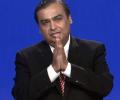
Reliance Industries Ltd (RIL) on Friday reported a 9.6 per cent year-on-year rise in net profit for the September quarter, driven by strong performance in its consumer-facing retail and telecom businesses and a recovery in its core oil-to-chemicals segment.

HCLTech expects its recent large acquisitions to contribute about 1.5 per cent to revenue in 2026-27 (FY27), Chief Executive Officer and Managing Director C Vijayakumar said, as the company looks to build newer revenue streams in a subdued macroeconomic environment.

The Supreme Court has directed the CBI to conduct a pan-India investigation into digital arrest scams and questioned the RBI about its lack of AI usage in detecting and freezing accounts used by cybercriminals.

'India may never fully participate in the AI hype cycle, but we can position ourselves to benefit from its inevitable disenchantment and the cycle of disillusionment,' alerts Akash Prakash.
Reliance holds 67.03% of Jio Platforms Limited and the public listing would provide an exit to many investors.
The stock of Bharti Airtel, India's largest listed telecommunications (telecom) services provider, recently hit an all-time high on expectations of higher average revenue per user (Arpu), a stable market setup, and fresh revenue lines.

Bharti Airtel sees opportunity in raising tariff for data services as it feels that rich are paying less and poor are not required to pay anymore, a senior official of the company said. During the company's earnings call for the first quarter of the current fiscal, Bharti Airtel vice-chairman and MD Gopal Vittal said that the company has written to the government for a relief on adjusted gross revenue and has demanded that it should be given benefit at par with other telecom operator, without naming Vodafone Idea.
Telecom firm Bharti Airtel will approach the government on the adjusted gross revenue (AGR) it has to pay the exchequer following the Supreme Court's judgment that the government can reassess all AGR dues, according to vice-chairman and managing director Gopal Vittal.

Indian-American executive Srini Gopalan has been appointed chief executive officer of telecom operator T-Mobile, amid ongoing debates over H-1B visa policies. Gopalan's appointment, effective from November 1, 2025, comes as US President Donald Trump signed a proclamation imposing a staggering $100,000 fee on new H-1B visas, triggering widespread panic, concern and fear among Indian professionals on work visa.

Union telecom minister Jyotiraditya Scindia on Tuesday said investment in India at present makes economic sense for every original equipment manufacturer, as he cited the example of US smart devices major Apple's decision to source majority of the iPhones sold in the US from the country. While speaking at the Bharat Telecom event, Scindia said the investment in India at present is not just an act of goodwill alone but it makes economic sense for every OEM (original equipment manufacturer).

Foreign brokerages remain cautious on the road ahead for the Indian equity markets. Though analysts at Nomura have revised their March 2026 Nifty target to 26,140 levels from the earlier 24,970, but the upside from the current levels is a modest 6 per cent. BofA Securities, on the other hand, has not made any change to its year-end Nifty target.

Power Grid Corporation of India's (PWGR's) Q3FY25 revenue declined 3 per cent year-on-year (Y-o-Y) to Rs 11,200 crore, with operating profit falling 7 per cent Y-o-Y to Rs 9,500 crore and margin contracting to 85 per cent from 91 per cent Y-o-Y. Other income surged 89 per cent Y-o-Y to Rs 500 crore, but regulatory income dropped 62 per cent Y-o-Y to Rs 42.5 crore.
Reliance Jio, India's biggest telecom operator, is planning to launch an initial public offering (IPO) and listing on bourses in the first half of 2026, billionaire Mukesh Ambani said on Friday. Jio is currently a unit of Reliance Industries Ltd, India's most valuable company.

Reliance Industries' refining earnings will remain steady, supported by its position as India's largest importer of Russian crude and favourable global supplies, according to analysts at JM Financial and Goldman Sachs. Reliance imported more Russian barrels than any other Indian refiner in the past eight months, according to data from Bloomberg/Kpler.
Asia's richest man Mukesh Ambani drew nil salary from his oil-to-telecom-and-retail conglomerate Reliance Industries for the fifth year in a row and dividends remain his main source of earnings. Ambani, 68, had capped his annual remuneration at Rs 15 crore from financial year 2008-09 (April 2008 to March 2009) to 2019-20 (FY20); and since FY21, he opted to forego his salary, due to COVID-19 pandemic, until the company and all its businesses were fully back to their earnings potential.

Reliance Industries (RIL), India's largest conglomerate, is set to pivot into a deeptech and advanced manufacturing enterprise, chairman and managing director (CMD) Mukesh Ambani said. "In artificial intelligence, our purpose is clear: to address complex societal challenges and create wealth for the nation and its people.
